
Challenging the Pelagic Assumption
Historically, Carcharhinus longimanus has been classified as a strictly pelagic species, preferring the open ocean and rarely venturing into shallow coastal waters except at specific oceanic pinnacles like Elphinstone. However, our new AI-driven identification data tells a different story.
Over the last 12 months, our citizen science platform received over 400 submissions. Cross-referencing these images revealed that three specific individuals—identified as "Titan," "Luna," and "Scar"—were photographed at both the offshore Brothers Islands and the coastal reefs of Marsa Alam within a span of just 14 days.
"This rapid transit between deep oceanic environments and coastal fringing reefs suggests that these sharks are using corridors we didn't know existed. It fundamentally changes how we must approach their protection."
Michael Davis Tweet
Implications for Conservation
If these sharks are regularly traversing shipping lanes to reach coastal feeding or cleaning grounds, they are at higher risk from vessel strikes and illegal fishing than previously estimated. We are now working with the HEPCA to propose "blue corridors"—seasonal protection zones along these suspected migration routes.
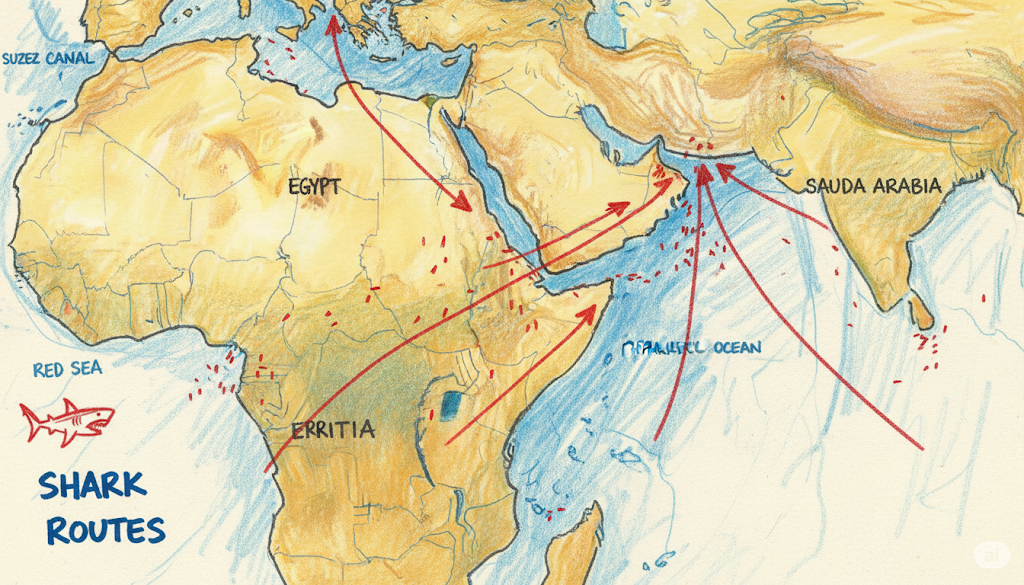
We are expanding our study to include satellite tagging in Q4 2025 to validate these photographic findings with high-resolution movement data.